TASTE TEST · CONSUMER VENTURE · TEAM OF 7
From consumer insight to venture strategy
A functional beverage subscription built from 41 survey responses. I led customer discovery, personas, brand strategy, and go-to-market positioning, and the research changed what the product was really selling: trust.
User research
Personas
Pricing
AI personalization
Go-to-market
MY ROLE
Customer discovery, personas, brand strategy, GTM positioning, project management
PRODUCT
Functional beverage subscription, $30/month
CONTEXT
SMU Cox MBA, New Venture Development
RESEARCH
41 survey responses, follow-up interviews, market analysis

THE PROBLEM
The beverage aisle is crowded and hard to trust.
Adaptogenic drinks, gut health sodas, nootropic waters, low-sugar alcohol alternatives. The products keep improving, but shoppers face a wall of unfamiliar brands, ingredients, and premium prices with no signal for what’s worth trying. They default to familiar brands, and good new brands can’t prove demand without shelf space.
74%
Of consumers prioritize health and wellness daily
$200B
Functional beverage market projected by 2030
DISCOVERY
What 41 survey responses told us.
I designed and ran the survey, led follow-up interviews, and synthesized the findings. The research confirmed the discovery problem, then went deeper: people weren’t avoiding functional drinks because they didn’t want them. The purchase felt risky. A $6 can with ashwagandha is a real bet on a taste you can’t predict.
WHAT INFLUENCES YOUR DRINK CHOICE?
Flavor comes first, ahead of health and price.
Flavor profile
85%
Health benefits
71%
Price
61%
Avoiding certain ingredients
39%
Brand familiarity
34%
Packaging and sustainability
22%
Select all that apply. n = 41 survey responses.
88%
enjoy trying new beverages
Agree or strongly agree
88%
rate personalization as very or extremely important
For a beverage subscription
THE INSIGHT
Shoppers worried about wasting $6 on a drink they’d hate. Solving discovery meant solving that risk.
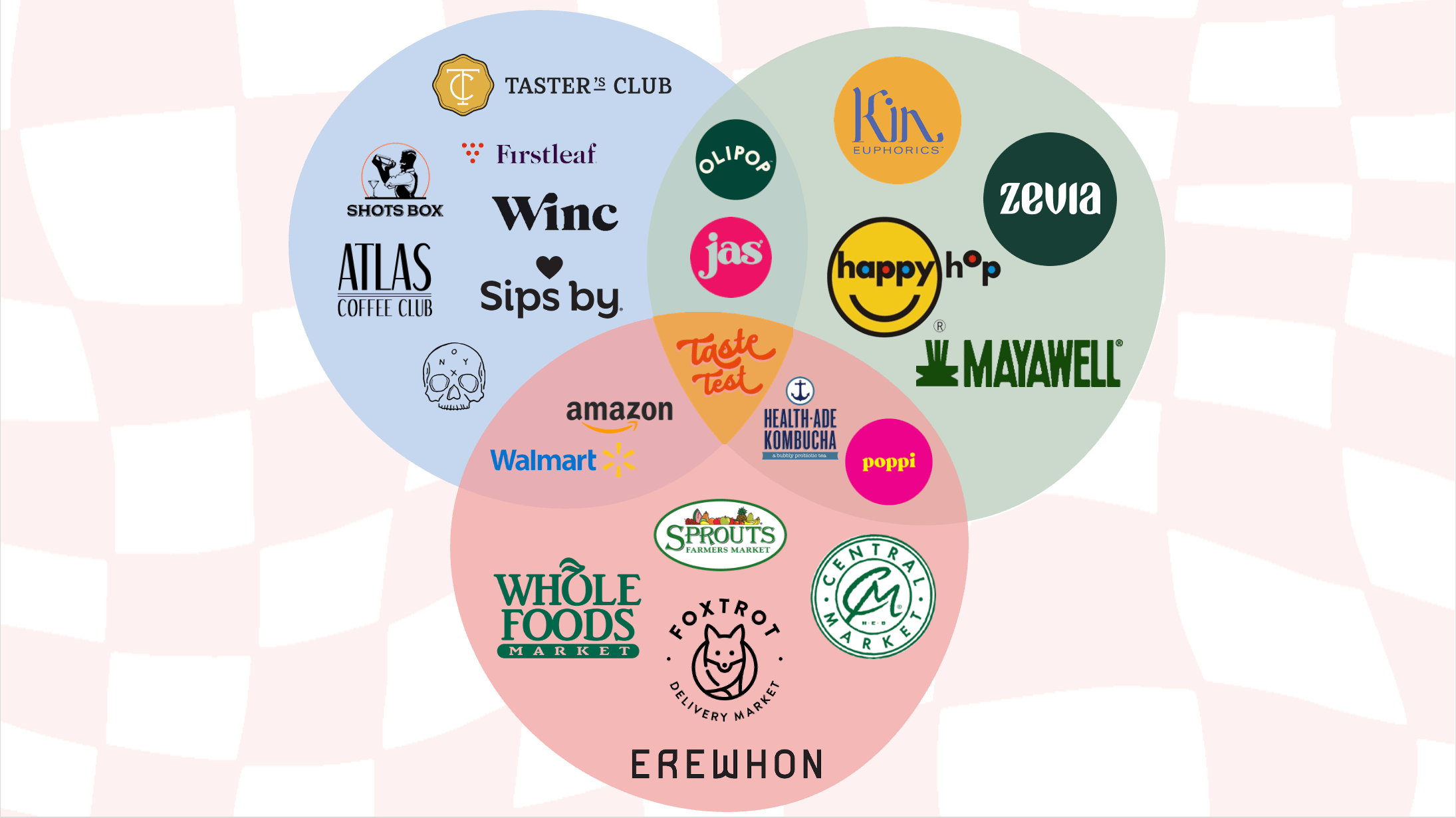
Where Taste Test sits: at the overlap of beverage subscription clubs, functional drink brands, and specialty retail.
WHO WE DESIGNED FOR
Three personas.
The Clean Girl
Health-driven and trend-aware, but overwhelmed by options and skeptical of brands that overpromise.
INSIGHT
She knows the category and wants a trusted filter, which curation and personalization give her.

The Health-Conscious
Outcome-driven: gut health, energy, stress. Can’t match drinks to goals without hours of research.
INSIGHT
Values the “tell us your taste” questionnaire most. It maps preferences to goals.
The DINK
Dual income, no kids. High disposable income, wants novelty without effort.
INSIGHT
Wants an experience more than a product, which made this persona the basis for themed boxes.

KEY DECISIONS
Four decisions that shaped Taste Test.
DECISION 01
Price it at $30 a month.
It had to feel like a no-brainer. A subscriber who finds two drinks they love has already saved more than $30 in single-can mistakes at $6 to $8 each. The price also covers the cost of AI personalization without ads or brand subsidies that would compromise curation.
TRADEOFF
A free model would have grown faster. We chose a price that could sustain a business.
DECISION 02
A monthly box of 10 cans.
Frequent enough to build a discovery habit, infrequent enough that each box feels like an event, with enough variety to make discovery work.
TRADEOFF
A monthly box means slower feedback for personalization. We accepted that so each box would feel like an event.
DECISION 03
Add themed boxes for life moments.
Dry January, a Valentine’s box for DINKs, pregnancy and period boxes. Each targets a life moment when people are most motivated to try something new, and each is naturally giftable, which helps acquisition.
TRADEOFF
Themes add operational complexity, so we scoped them as V2 on top of a working V1 subscription.
DECISION 04
Use AI personalization instead of editorial picks.
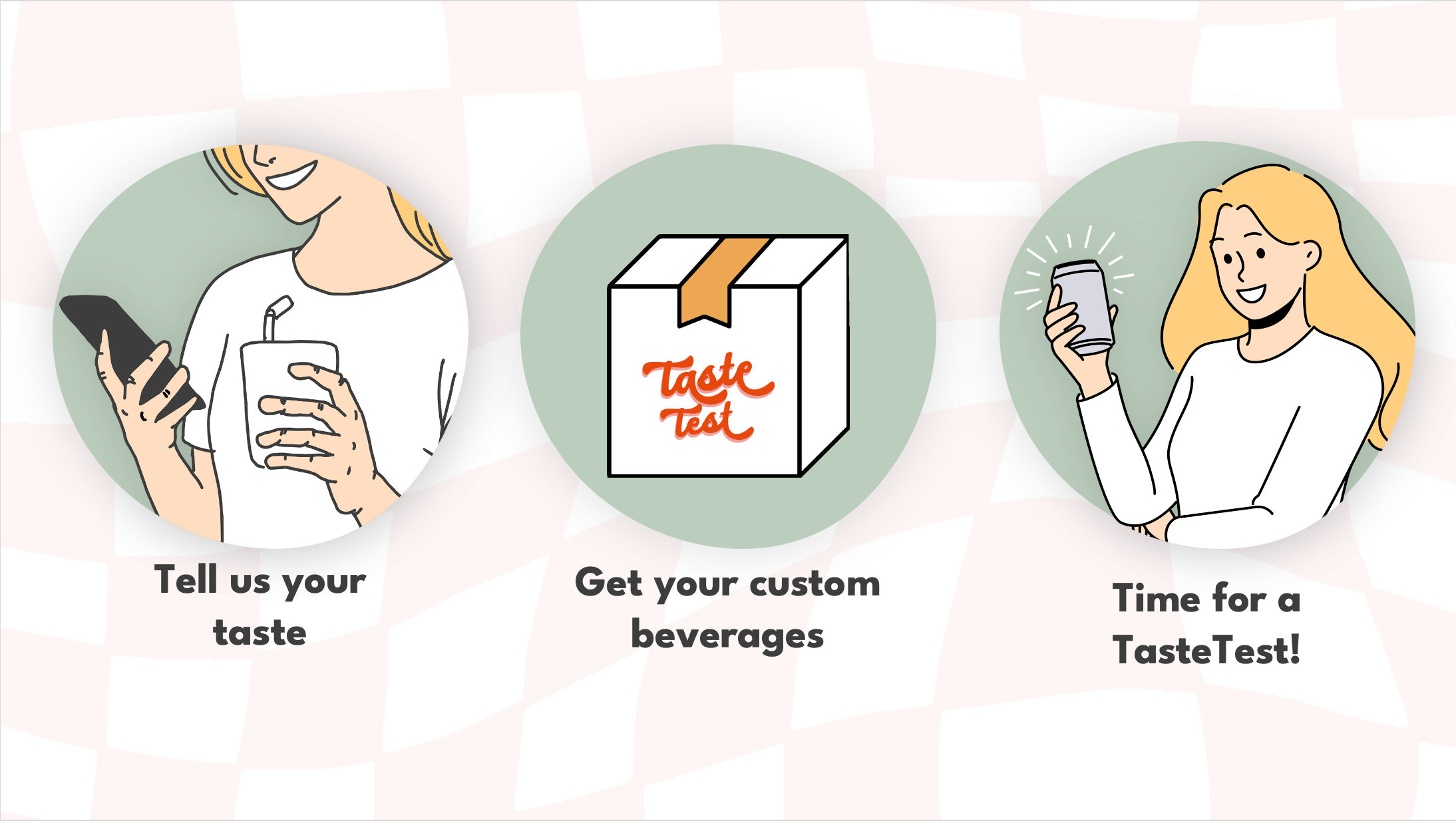
An editorial box stays the same quality forever. A personalized box improves the longer a subscriber stays. The questionnaire (“tell us your taste”) is the input.
TRADEOFF
With 500 customers at launch, the model starts simple. We designed for how it improves as subscribers stay.
THE QUESTIONNAIRE
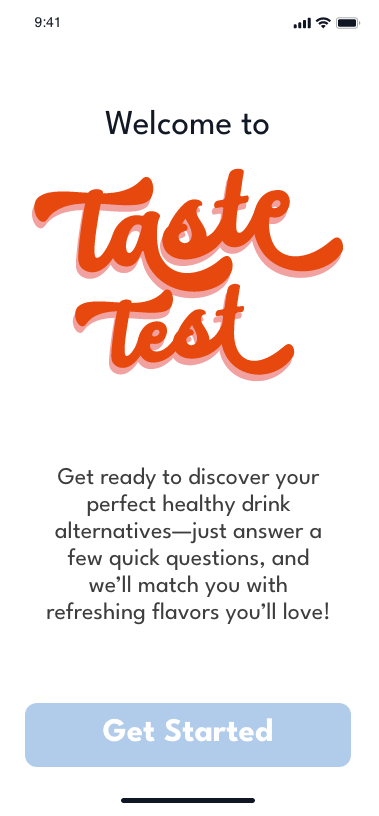
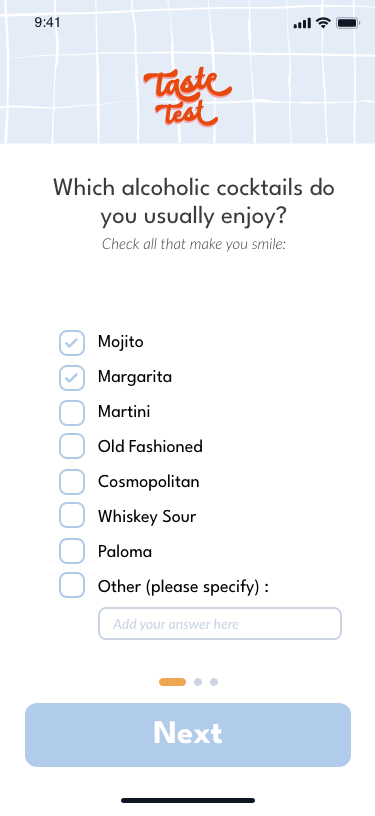
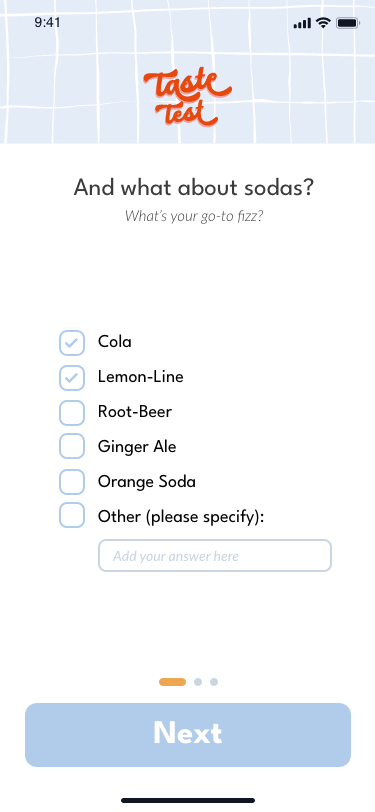
“Tell us your taste” is the input for personalization. Three quick screens map a new subscriber’s preferences before the first box ships.
01
Welcome
02
Flavors
03
Sodas
UNIT ECONOMICS
The numbers had to work before the brand did.
~7x
Lifetime value to acquisition cost
Customer lifetime value
$220
Customer acquisition cost
$32
26%
Profit margin
$22.35
Cost per box after month 1
500
Customers at launch
THE ASK
$175,000 + mentorship
$100,000
Year-one marketing
$70,000
Working capital
GO-TO-MARKET
Start in Dallas, build a community, then scale.
A new subscription brand can’t buy trust with ads. We wanted early subscribers to feel they found us themselves.
01
In-person tastings
Gyms, yoga studios, spas, co-working spaces, boutique grocers, and farmer’s markets in Dallas. A free sample that tastes good removes purchase risk better than any ad.
02
Micro-influencers
Dallas and Houston creators with engaged communities. A fitness coach with 8,000 local followers who drinks the product can move more subscriptions than a national account.
03
Themed boxes as acquisition
Dry January is a moment when many people are actively looking for alcohol alternatives. The theme creates the context. The product creates retention.
THE BRAND
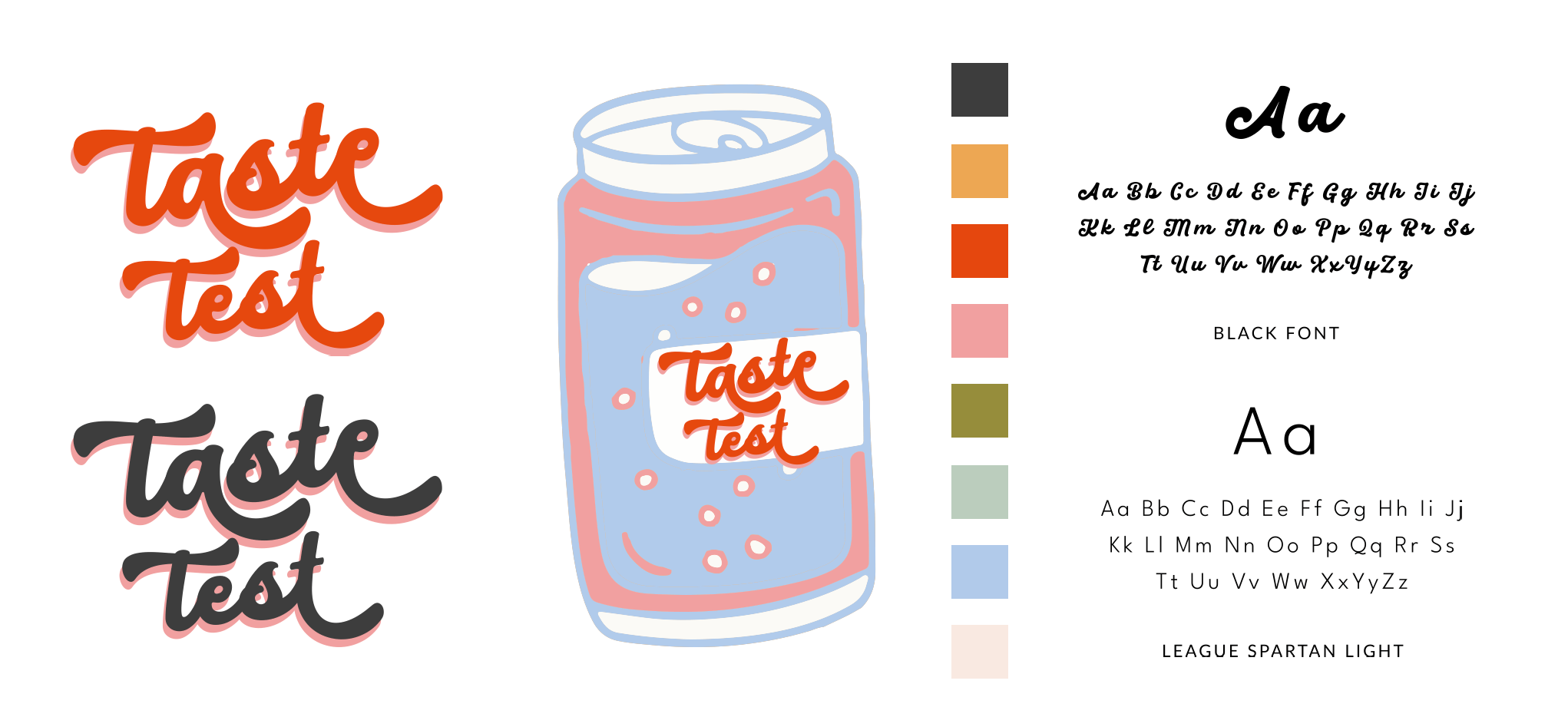
Functional beverage brands tend to look clinical or generic. Taste Test is neither: a hand-lettered logo, a warm orange and soft pastel palette, and playful type built around the moment the box arrives.
RETROSPECTIVE
What I’d do differently.
01
Prototype the questionnaire early.
We made a strong case for AI curation but never tested whether the questionnaire produces meaningfully different recommendations for different people.
02
Work out the brand partnership mechanics.
Our value depended on signing interesting emerging brands. We called the deal mutually beneficial but never worked out how to sign the first five with zero subscribers.
03
Keep the model assumptions consistent.
Our deck used a 30% retention rate in some tables and 20% in others. In a real pitch, one set of assumptions has to hold everywhere.
04
Test a lower entry price.
Our survey pointed below our $30 price: 54% said they would pay under $20 for a box. I’d test a smaller $20 entry box before committing to one price.
THE PM TAKEAWAY
Listening past the first answer.
Consumers said they wanted better drinks. When we dug in, they wanted permission to try something new without feeling foolish for paying for one they might hate. That changed the product from a beverage company into a way to lower the risk of trying. Research didn’t hand us the answer, but it gave us enough evidence to make a better bet.
LET’S TALK
Building for real people
at scale?
I’m looking for an Associate Product Manager role on a team like yours. LinkedIn is the fastest way to reach me.
NEXT CASE STUDY
Learner Mobile →
From consulting firm to product-led company.
TASTE TEST · CONSUMER VENTURE · TEAM OF 7
From consumer insight to venture strategy
A functional beverage subscription built from 41 survey responses. I led customer discovery, personas, brand strategy, and go-to-market positioning, and the research changed what the product was really selling: trust.
User research
Personas
Pricing
AI personalization
Go-to-market
MY ROLE
Customer discovery, personas, brand strategy, GTM positioning, project management
PRODUCT
Functional beverage subscription, $30/month
CONTEXT
SMU Cox MBA, New Venture Development
RESEARCH
41 survey responses, follow-up interviews, market analysis
THE PROBLEM
The beverage aisle is crowded and hard to trust.
Adaptogenic drinks, gut health sodas, nootropic waters, low-sugar alcohol alternatives. The products keep improving, but shoppers face a wall of unfamiliar brands, ingredients, and premium prices with no signal for what’s worth trying. They default to familiar brands, and good new brands can’t prove demand without shelf space.
74%
Of consumers prioritize health and wellness daily
$200B
Functional beverage market projected by 2030
DISCOVERY
What 41 survey responses told us.
I designed and ran the survey, led follow-up interviews, and synthesized the findings. The research confirmed the discovery problem, then went deeper: people weren’t avoiding functional drinks because they didn’t want them. The purchase felt risky. A $6 can with ashwagandha is a real bet on a taste you can’t predict.
WHAT INFLUENCES YOUR DRINK CHOICE?
Flavor comes first, ahead of health and price.
Flavor profile
85%
Health benefits
71%
Price
61%
Avoiding certain ingredients
39%
Brand familiarity
34%
Packaging and sustainability
22%
Select all that apply. n = 41 survey responses.
88%
enjoy trying new beverages
Agree or strongly agree
88%
rate personalization as very or extremely important
For a beverage subscription
THE INSIGHT
Shoppers worried about wasting $6 on a drink they’d hate. Solving discovery meant solving that risk.
Where Taste Test sits: at the overlap of beverage subscription clubs, functional drink brands, and specialty retail.
WHO WE DESIGNED FOR
Three personas.
The Clean Girl
Health-driven and trend-aware, but overwhelmed by options and skeptical of brands that overpromise.
INSIGHT
She knows the category and wants a trusted filter, which curation and personalization give her.
The Health-Conscious
Outcome-driven: gut health, energy, stress. Can’t match drinks to goals without hours of research.
INSIGHT
Values the “tell us your taste” questionnaire most. It maps preferences to goals.
The DINK
Dual income, no kids. High disposable income, wants novelty without effort.
INSIGHT
Wants an experience more than a product, which made this persona the basis for themed boxes.
KEY DECISIONS
Four decisions that shaped Taste Test.
DECISION 01
Price it at $30 a month.
It had to feel like a no-brainer. A subscriber who finds two drinks they love has already saved more than $30 in single-can mistakes at $6 to $8 each. The price also covers the cost of AI personalization without ads or brand subsidies that would compromise curation.
TRADEOFF
A free model would have grown faster. We chose a price that could sustain a business.
DECISION 02
A monthly box of 10 cans.
Frequent enough to build a discovery habit, infrequent enough that each box feels like an event, with enough variety to make discovery work.
TRADEOFF
A monthly box means slower feedback for personalization. We accepted that so each box would feel like an event.
DECISION 03
Add themed boxes for life moments.
Dry January, a Valentine’s box for DINKs, pregnancy and period boxes. Each targets a life moment when people are most motivated to try something new, and each is naturally giftable, which helps acquisition.
TRADEOFF
Themes add operational complexity, so we scoped them as V2 on top of a working V1 subscription.
DECISION 04
Use AI personalization instead of editorial picks.
An editorial box stays the same quality forever. A personalized box improves the longer a subscriber stays. The questionnaire (“tell us your taste”) is the input.
TRADEOFF
With 500 customers at launch, the model starts simple. We designed for how it improves as subscribers stay.
THE QUESTIONNAIRE
“Tell us your taste” is the input for personalization. Three quick screens map a new subscriber’s preferences before the first box ships.
01
Welcome
02
Flavors
03
Sodas
UNIT ECONOMICS
The numbers had to work before the brand did.
~7x
Lifetime value to acquisition cost
Customer lifetime value
$220
Customer acquisition cost
$32
26%
Profit margin
$22.35
Cost per box after month 1
500
Customers at launch
THE ASK
$175,000 + mentorship
$100,000
Year-one marketing
$70,000
Working capital
GO-TO-MARKET
Start in Dallas, build a community, then scale.
A new subscription brand can’t buy trust with ads. We wanted early subscribers to feel they found us themselves.
01
In-person tastings
Gyms, yoga studios, spas, co-working spaces, boutique grocers, and farmer’s markets in Dallas. A free sample that tastes good removes purchase risk better than any ad.
02
Micro-influencers
Dallas and Houston creators with engaged communities. A fitness coach with 8,000 local followers who drinks the product can move more subscriptions than a national account.
03
Themed boxes as acquisition
Dry January is a moment when many people are actively looking for alcohol alternatives. The theme creates the context. The product creates retention.
THE BRAND
Functional beverage brands tend to look clinical or generic. Taste Test is neither: a hand-lettered logo, a warm orange and soft pastel palette, and playful type built around the moment the box arrives.
RETROSPECTIVE
What I’d do differently.
01
Prototype the questionnaire early.
We made a strong case for AI curation but never tested whether the questionnaire produces meaningfully different recommendations for different people.
02
Work out the brand partnership mechanics.
Our value depended on signing interesting emerging brands. We called the deal mutually beneficial but never worked out how to sign the first five with zero subscribers.
03
Keep the model assumptions consistent.
Our deck used a 30% retention rate in some tables and 20% in others. In a real pitch, one set of assumptions has to hold everywhere.
04
Test a lower entry price.
Our survey pointed below our $30 price: 54% said they would pay under $20 for a box. I’d test a smaller $20 entry box before committing to one price.
THE PM TAKEAWAY
Listening past the first answer.
Consumers said they wanted better drinks. When we dug in, they wanted permission to try something new without feeling foolish for paying for one they might hate. That changed the product from a beverage company into a way to lower the risk of trying. Research didn’t hand us the answer, but it gave us enough evidence to make a better bet.
LET’S TALK
Building for real people
at scale?
I’m looking for an Associate Product Manager role on a team like yours. LinkedIn is the fastest way to reach me.
NEXT CASE STUDY
Learner Mobile →
From consulting firm to product-led company.
TASTE TEST · CONSUMER VENTURE · TEAM OF 7
From consumer insight
to venture strategy
A functional beverage subscription built from 41 survey responses. I led customer discovery, personas, brand strategy, and go-to-market positioning, and the research changed what the product was really selling: trust.
User research
Personas
Pricing
AI personalization
Go-to-market
MY ROLE
Customer discovery, personas, brand strategy, GTM positioning, project management
PRODUCT
Functional beverage subscription, $30/month
CONTEXT
SMU Cox MBA, New Venture Development
RESEARCH
41 survey responses, follow-up interviews, market analysis
THE PROBLEM
The beverage aisle is crowded and hard to trust.
Adaptogenic drinks, gut health sodas, nootropic waters, low-sugar alcohol alternatives. The products keep improving, but shoppers face a wall of unfamiliar brands, ingredients, and premium prices with no signal for what’s worth trying. They default to familiar brands, and good new brands can’t prove demand without shelf space.
74%
Of consumers prioritize health and wellness daily
$200B
Functional beverage market projected by 2030
DISCOVERY
What 41 survey responses told us.
I designed and ran the survey, led follow-up interviews, and synthesized the findings. The research confirmed the discovery problem, then went deeper: people weren’t avoiding functional drinks because they didn’t want them. The purchase felt risky. A $6 can with ashwagandha is a real bet on a taste you can’t predict.
WHAT INFLUENCES YOUR DRINK CHOICE?
Flavor comes first, ahead of health and price.
Flavor profile
85%
Health benefits
71%
Price
61%
Avoiding certain ingredients
39%
Brand familiarity
34%
Packaging and sustainability
22%
Select all that apply. n = 41 survey responses.
88%
enjoy trying new beverages
Agree or strongly agree
88%
rate personalization as very or extremely important
For a beverage subscription
THE INSIGHT
Shoppers worried about wasting $6 on a drink they’d hate. Solving discovery meant solving that risk.
Where Taste Test sits: at the overlap of beverage subscription clubs, functional drink brands, and specialty retail.
WHO WE DESIGNED FOR
Three personas.
The Clean Girl
Health-driven and trend-aware, but overwhelmed by options and skeptical of brands that overpromise.
INSIGHT
She knows the category and wants a trusted filter, which curation and personalization give her.
The Health-Conscious
Outcome-driven: gut health, energy, stress. Can’t match drinks to goals without hours of research.
INSIGHT
Values the “tell us your taste” questionnaire most. It maps preferences to goals.
The DINK
Dual income, no kids. High disposable income, wants novelty without effort.
INSIGHT
Wants an experience more than a product, which made this persona the basis for themed boxes.
KEY DECISIONS
Four decisions that shaped Taste Test.
DECISION 01
Price it at $30 a month.
It had to feel like a no-brainer. A subscriber who finds two drinks they love has already saved more than $30 in single-can mistakes at $6 to $8 each. The price also covers the cost of AI personalization without ads or brand subsidies that would compromise curation.
TRADEOFF
A free model would have grown faster. We chose a price that could sustain a business.
DECISION 02
A monthly box of 10 cans.
Frequent enough to build a discovery habit, infrequent enough that each box feels like an event, with enough variety to make discovery work.
TRADEOFF
A monthly box means slower feedback for personalization. We accepted that so each box would feel like an event.
DECISION 03
Add themed boxes for life moments.
Dry January, a Valentine’s box for DINKs, pregnancy and period boxes. Each targets a life moment when people are most motivated to try something new, and each is naturally giftable, which helps acquisition.
TRADEOFF
Themes add operational complexity, so we scoped them as V2 on top of a working V1 subscription.
DECISION 04
Use AI personalization instead of editorial picks.
An editorial box stays the same quality forever. A personalized box improves the longer a subscriber stays. The questionnaire (“tell us your taste”) is the input.
TRADEOFF
With 500 customers at launch, the model starts simple. We designed for how it improves as subscribers stay.
THE QUESTIONNAIRE
“Tell us your taste” is the input for personalization. Three quick screens map a new subscriber’s preferences before the first box ships.
01
Welcome
02
Flavors
03
Sodas
UNIT ECONOMICS
The numbers had to work before the brand did.
~7x
Lifetime value to acquisition cost
Customer lifetime value
$220
Customer acquisition cost
$32
26%
Profit margin
$22.35
Cost per box after month 1
500
Customers at launch
THE ASK
$175,000 + mentorship
$100,000
Year-one marketing
$70,000
Working capital
GO-TO-MARKET
Start in Dallas, build a community, then scale.
A new subscription brand can’t buy trust with ads. We wanted early subscribers to feel they found us themselves.
01
In-person tastings
Gyms, yoga studios, spas, co-working spaces, boutique grocers, and farmer’s markets in Dallas. A free sample that tastes good removes purchase risk better than any ad.
02
Micro-influencers
Dallas and Houston creators with engaged communities. A fitness coach with 8,000 local followers who drinks the product can move more subscriptions than a national account.
03
Themed boxes as acquisition
Dry January is a moment when many people are actively looking for alcohol alternatives. The theme creates the context. The product creates retention.
THE BRAND
Functional beverage brands tend to look clinical or generic. Taste Test is neither: a hand-lettered logo, a warm orange and soft pastel palette, and playful type built around the moment the box arrives.
RETROSPECTIVE
What I’d do differently.
01
Prototype the questionnaire early.
We made a strong case for AI curation but never tested whether the questionnaire produces meaningfully different recommendations for different people.
02
Work out the brand partnership mechanics.
Our value depended on signing interesting emerging brands. We called the deal mutually beneficial but never worked out how to sign the first five with zero subscribers.
03
Keep the model assumptions consistent.
Our deck used a 30% retention rate in some tables and 20% in others. In a real pitch, one set of assumptions has to hold everywhere.
04
Test a lower entry price.
Our survey pointed below our $30 price: 54% said they would pay under $20 for a box. I’d test a smaller $20 entry box before committing to one price.
THE PM TAKEAWAY
Listening past the first answer.
Consumers said they wanted better drinks. When we dug in, they wanted permission to try something new without feeling foolish for paying for one they might hate. That changed the product from a beverage company into a way to lower the risk of trying. Research didn’t hand us the answer, but it gave us enough evidence to make a better bet.
LET’S TALK
Building for real people at scale?
I’m looking for an Associate Product Manager role on a team like yours. The fastest way to reach me is LinkedIn.
NEXT CASE STUDY
Learner Mobile →
From consulting firm to product-led company.
TASTE TEST · CONSUMER VENTURE · TEAM OF 7
From consumer insight
to venture strategy
A functional beverage subscription built from 41 survey responses. I led customer discovery, personas, brand strategy, and go-to-market positioning, and the research changed what the product was really selling: trust.
User research
Personas
Pricing
AI personalization
Go-to-market
MY ROLE
Customer discovery, personas, brand strategy, GTM positioning, project management
PRODUCT
Functional beverage subscription, $30/month
CONTEXT
SMU Cox MBA, New Venture Development
RESEARCH
41 survey responses, follow-up interviews, market analysis
ON THIS PAGE
THE PROBLEM
The beverage aisle is crowded and hard to trust.
Adaptogenic drinks, gut health sodas, nootropic waters, low-sugar alcohol alternatives. The products keep improving, but shoppers face a wall of unfamiliar brands, ingredients, and premium prices with no signal for what’s worth trying. They default to familiar brands, and good new brands can’t prove demand without shelf space.
74%
Of consumers prioritize health and wellness daily
$200B
Functional beverage market projected by 2030
DISCOVERY
What 41 survey responses told us.
I designed and ran the survey, led follow-up interviews, and synthesized the findings. The research confirmed the discovery problem, then went deeper: people weren’t avoiding functional drinks because they didn’t want them. The purchase felt risky. A $6 can with ashwagandha is a real bet on a taste you can’t predict.
WHAT INFLUENCES YOUR DRINK CHOICE?
Flavor comes first, ahead of health and price.
Flavor profile
85%
Health benefits
71%
Price
61%
Avoiding certain ingredients
39%
Brand familiarity
34%
Packaging and sustainability
22%
Select all that apply. n = 41 survey responses.
88%
enjoy trying new beverages
Agree or strongly agree
88%
rate personalization as very or extremely important
For a beverage subscription
THE INSIGHT
Shoppers worried about wasting $6 on a drink they’d hate. Solving discovery meant solving that risk.
Where Taste Test sits: at the overlap of beverage subscription clubs, functional drink brands, and specialty retail.
WHO WE DESIGNED FOR
Three personas.
The Clean Girl
Health-driven and trend-aware, but overwhelmed by options and skeptical of brands that overpromise.
INSIGHT
She knows the category and wants a trusted filter, which curation and personalization give her.
The Health-Conscious
Outcome-driven: gut health, energy, stress. Can’t match drinks to goals without hours of research.
INSIGHT
Values the “tell us your taste” questionnaire most. It maps preferences to goals.
The DINK
Dual income, no kids. High disposable income, wants novelty without effort.
INSIGHT
Wants an experience more than a product, which made this persona the basis for themed boxes.
KEY DECISIONS
Four decisions that shaped Taste Test.
DECISION 01
Price it at $30 a month.
It had to feel like a no-brainer. A subscriber who finds two drinks they love has already saved more than $30 in single-can mistakes at $6 to $8 each. The price also covers the cost of AI personalization without ads or brand subsidies that would compromise curation.
TRADEOFF
A free model would have grown faster. We chose a price that could sustain a business.
DECISION 02
A monthly box of 10 cans.
Frequent enough to build a discovery habit, infrequent enough that each box feels like an event, with enough variety to make discovery work.
TRADEOFF
A monthly box means slower feedback for personalization. We accepted that so each box would feel like an event.
DECISION 03
Add themed boxes for life moments.
Dry January, a Valentine’s box for DINKs, pregnancy and period boxes. Each targets a life moment when people are most motivated to try something new, and each is naturally giftable, which helps acquisition.
TRADEOFF
Themes add operational complexity, so we scoped them as V2 on top of a working V1 subscription.
DECISION 04
Use AI personalization instead of editorial picks.
An editorial box stays the same quality forever. A personalized box improves the longer a subscriber stays. The questionnaire (“tell us your taste”) is the input.
TRADEOFF
With 500 customers at launch, the model starts simple. We designed for how it improves as subscribers stay.
THE QUESTIONNAIRE
“Tell us your taste” is the input for personalization. Three quick screens map a new subscriber’s preferences before the first box ships.
01
Welcome
02
Flavors
03
Sodas
UNIT ECONOMICS
The numbers had to work before the brand did.
~7x
Lifetime value to acquisition cost
Customer lifetime value
$220
Customer acquisition cost
$32
26%
Profit margin
$22.35
Cost per box after month 1
500
Customers at launch
THE ASK
$175,000 + mentorship
$100,000
Year-one marketing
$70,000
Working capital
GO-TO-MARKET
Start in Dallas, build a community, then scale.
A new subscription brand can’t buy trust with ads. We wanted early subscribers to feel they found us themselves.
01
In-person tastings
Gyms, yoga studios, spas, co-working spaces, boutique grocers, and farmer’s markets in Dallas. A free sample that tastes good removes purchase risk better than any ad.
02
Micro-influencers
Dallas and Houston creators with engaged communities. A fitness coach with 8,000 local followers who drinks the product can move more subscriptions than a national account.
03
Themed boxes as acquisition
Dry January is a moment when many people are actively looking for alcohol alternatives. The theme creates the context. The product creates retention.
THE BRAND
Functional beverage brands tend to look clinical or generic. Taste Test is neither: a hand-lettered logo, a warm orange and soft pastel palette, and playful type built around the moment the box arrives.
RETROSPECTIVE
What I’d do differently.
01
Prototype the questionnaire early.
We made a strong case for AI curation but never tested whether the questionnaire produces meaningfully different recommendations for different people.
02
Work out the brand partnership mechanics.
Our value depended on signing interesting emerging brands. We called the deal mutually beneficial but never worked out how to sign the first five with zero subscribers.
03
Keep the model assumptions consistent.
Our deck used a 30% retention rate in some tables and 20% in others. In a real pitch, one set of assumptions has to hold everywhere.
04
Test a lower entry price.
Our survey pointed below our $30 price: 54% said they would pay under $20 for a box. I’d test a smaller $20 entry box before committing to one price.
THE PM TAKEAWAY
Listening past the first answer.
Consumers said they wanted better drinks. When we dug in, they wanted permission to try something new without feeling foolish for paying for one they might hate. That changed the product from a beverage company into a way to lower the risk of trying. Research didn’t hand us the answer, but it gave us enough evidence to make a better bet.
LET’S TALK
Building for real people at scale?
I’m looking for an Associate Product Manager role on a team like yours. The fastest way to reach me is LinkedIn.
NEXT CASE STUDY
Learner Mobile →
From consulting firm to product-led company.